Theodor Schokker Dutch, b. 1933

Schokker (born 1933, Amsterdam) is a sculptor whose abstract works are guided not by form but by subtle, often barely perceptible events in nature. He describes his practice as Physioplastic — art rooted in observation.
Born and raised in Amsterdam, Schokker continues to work from his studio in the Jordaan.
Beyond his artistic practice, Schokker has been an outspoken advocate for better social provisions and affordable studio spaces for artists. In the 1970s and 1980s, he organized occupations of the Rijksmuseum and the Stedelijk Museum in Amsterdam, together with fellow artists and supporters, to underline these demands.
-
 Untitled, 2011
 -
Contrapunt, 1983
-
Physioplastic 3, 1982
-
STATICA , 1976
-
Untitled (freeform), 1960 Sold
-
Construction, 1971 Sold
-
Physioplastic 4, 1983
-
Untitled (Geometric Totem No.1), 1955
-
Untitled, 1986
-
Physioplastic 8, 1984
-
Balance, 1973

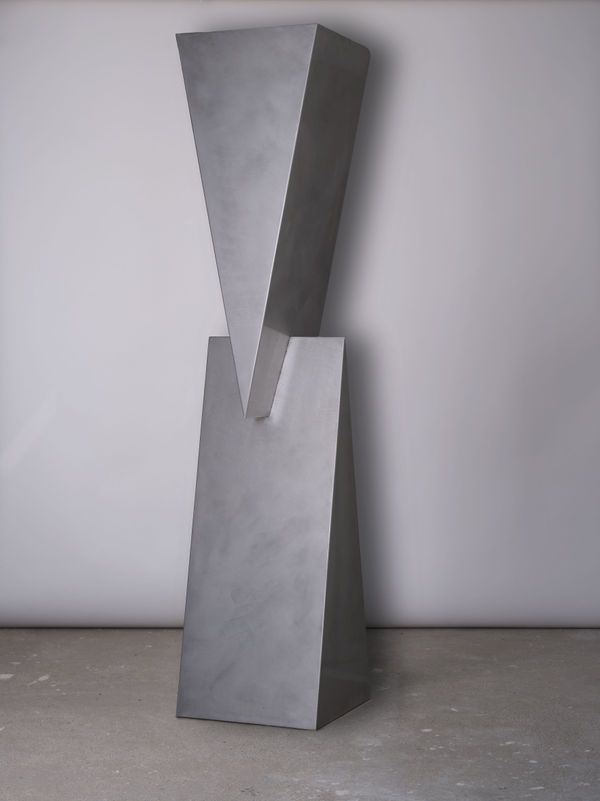


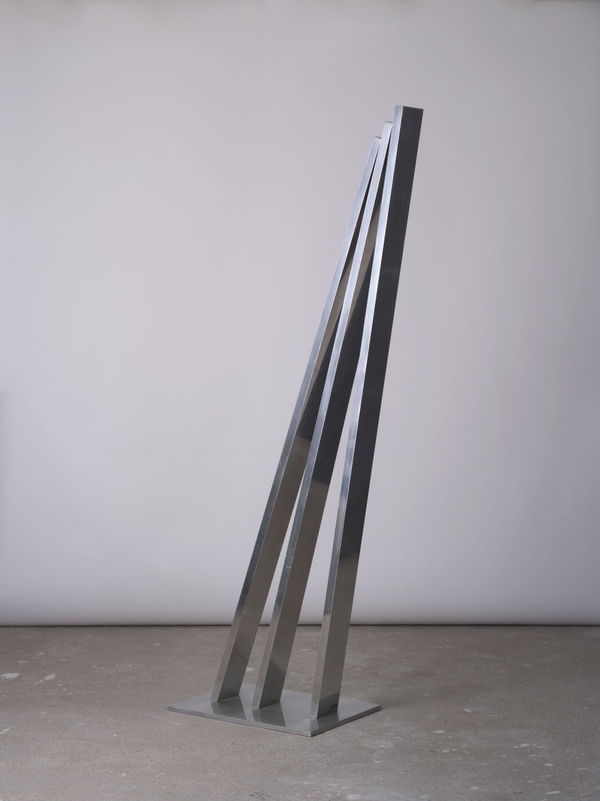


Theodor Schokker (b. 1933) is a Dutch Constructivist sculptor whose refined geometric works explore the relationship between space, balance and architecture. Working primarily in aluminium and steel, his sculptures have become an important contribution to post-war Dutch geometric abstraction.
Theodor Schokker (Dutch, b. 1933)
Theodor Schokker is one of the Netherlands' most accomplished post-war geometric sculptors, renowned for his refined abstract constructions in metal. Born in Amsterdam in 1933, he initially trained and worked as a welder, developing an intimate understanding of steel and aluminium that would become fundamental to his artistic practice. Entirely self-taught as a sculptor, Schokker established a distinctive visual language rooted in precision, balance and architectural structure.
Emerging during the 1960s and 1970s, Schokker became associated with the Dutch Constructivist tradition, creating sculptures that investigate the relationship between volume and void, gravity and equilibrium, light and shadow. Rather than treating sculpture as a solid object, his works invite the surrounding space to become an active component of the composition. Their restrained geometric forms reveal a remarkable sensitivity to proportion, resulting in sculptures that appear both monumental and weightless.
During the 1980s Schokker further expanded his practice through his celebrated Physioplastic series, inspired by natural laws and the invisible forces governing movement and balance. Throughout his career he has remained committed to exploring the dialogue between mathematics, architecture and the physical world.
Alongside his artistic practice, Schokker played an important role in the Dutch cultural landscape as chairman of the Beroepsvereniging van Beeldende Kunstenaars (BBK), where he advocated for artists' rights, affordable studio spaces and improved cultural policy. His work has been exhibited extensively in museums, galleries and public spaces throughout the Netherlands and internationally, and is represented in numerous public and private collections.
Today, Theodor Schokker is regarded as one of the undiscorvered figures of Dutch geometric abstraction. His sculptures stand at the intersection of Constructivism, Minimalism and architectural thinking, distinguished by their exceptional craftsmanship, timeless elegance and enduring exploration of space, structure and balance.
-

kunstRAI Amsterdam 2026
UNDER CONSTRUCTION 22 - 26 Apr 2026Under Construction Voor het Designplein van KunstRAI 2026 ontwikkelt curator Niek Schoenmakers een presentatie waarin design wordt benaderd als een veld in beweging. Onder de...Read more -

PAN Amsterdam 2025
A Dinner At The Millen House 2 - 8 Nov 2025The Millen House debuts at PAN Amsterdam with A Dinner at The Millen House: an intimate dining room where art and design come together. “Instead...Read more